
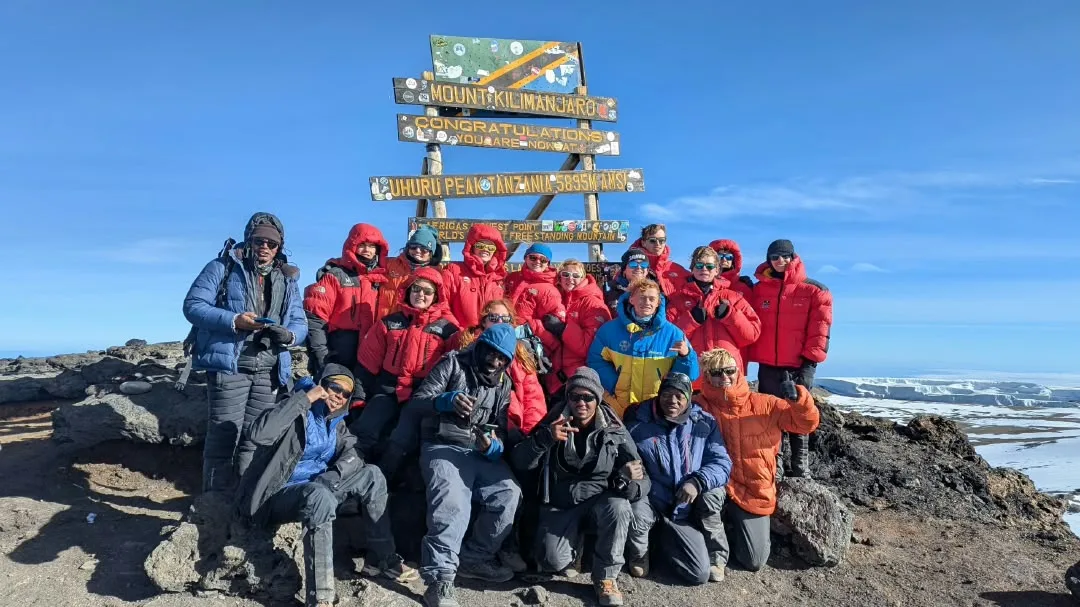
Mlima Kilimanjaro
Climb Kilimanjaro with a Guide Who Has Summited 275+ Times
Lemosho, Machame, Rongai, Shira and the Northern Circuit, in six to nine days.
Climbs planned in Arusha and led by our own mountain team under John Simon Maeda.
Before you choose
How to climb Kilimanjaro: choose the route, then the days
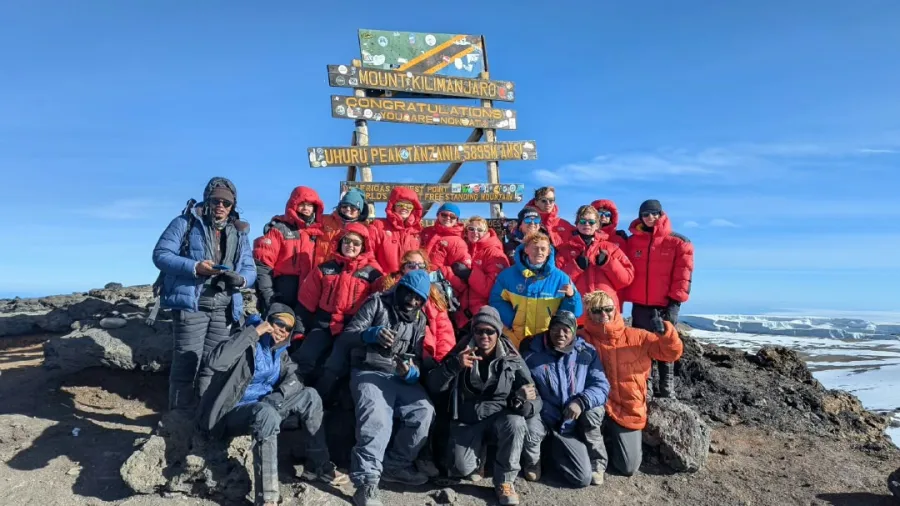
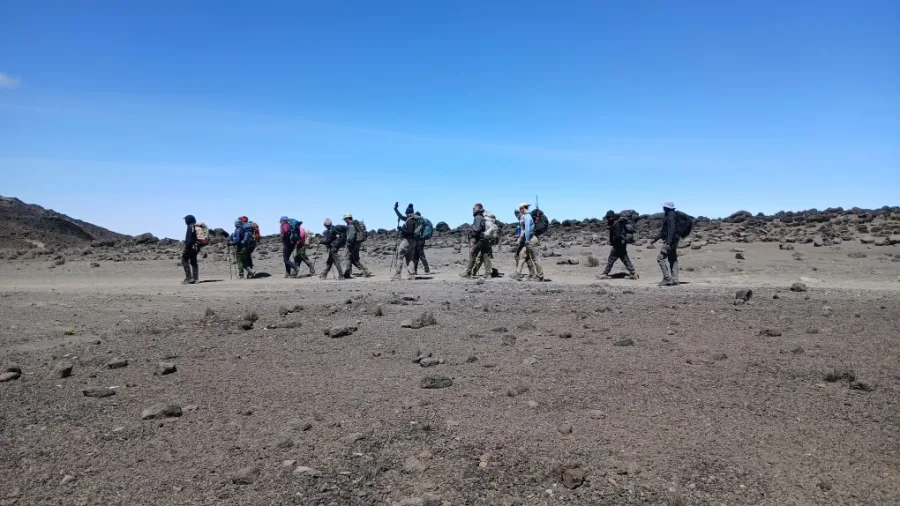
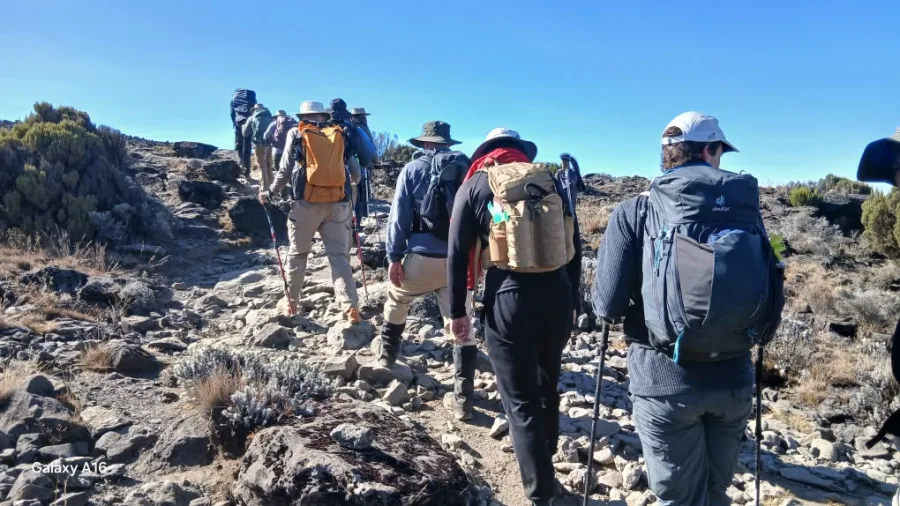
You do not need climbing skills to climb Kilimanjaro. It is a long walk at high altitude, and that is what makes it hard. You walk for several days through rainforest, heath and moorland, then alpine desert. Around midnight on summit night you leave the last camp for Uhuru Peak, the top of Africa at 5,895 m.
Altitude, not fitness, is what turns most people back. For that reason, the route and the number of days matter more than anything else you choose. Extra days give your body time to adjust, and each route below shows how many days it takes.
John Simon Maeda, our lead mountain guide and director, plans our climbs. He was born on the slopes of Kilimanjaro, started as a porter and trained with NOLS in 1999. Since then he has reached the summit more than 275 times, with climbers aged 9 to 86. He also trains local guides, porters and cooks as an instructor at the Sentinel Outdoor Institute.
Kilimanjaro routes compared
Every route below comes from our own itineraries. The camps are the ones you sleep at.
| Route | Days | Starts at | Last camp before the summit | Comes down via |
|---|---|---|---|---|
| Machame | 6 or 7 | Machame Gate | Barafu Camp | Mweka |
| Lemosho | 7 or 8 | Londorossi Gate | Barafu Camp | Mweka |
| Shira | 7 or 8 | Londorossi Gate | Barafu Camp | Mweka |
| Rongai | 6 or 7 | Rongai Gate | Kibo Hut | Marangu |
| Northern Circuit | 9 | Londorossi Gate | School Hut | Mweka |
Machame route
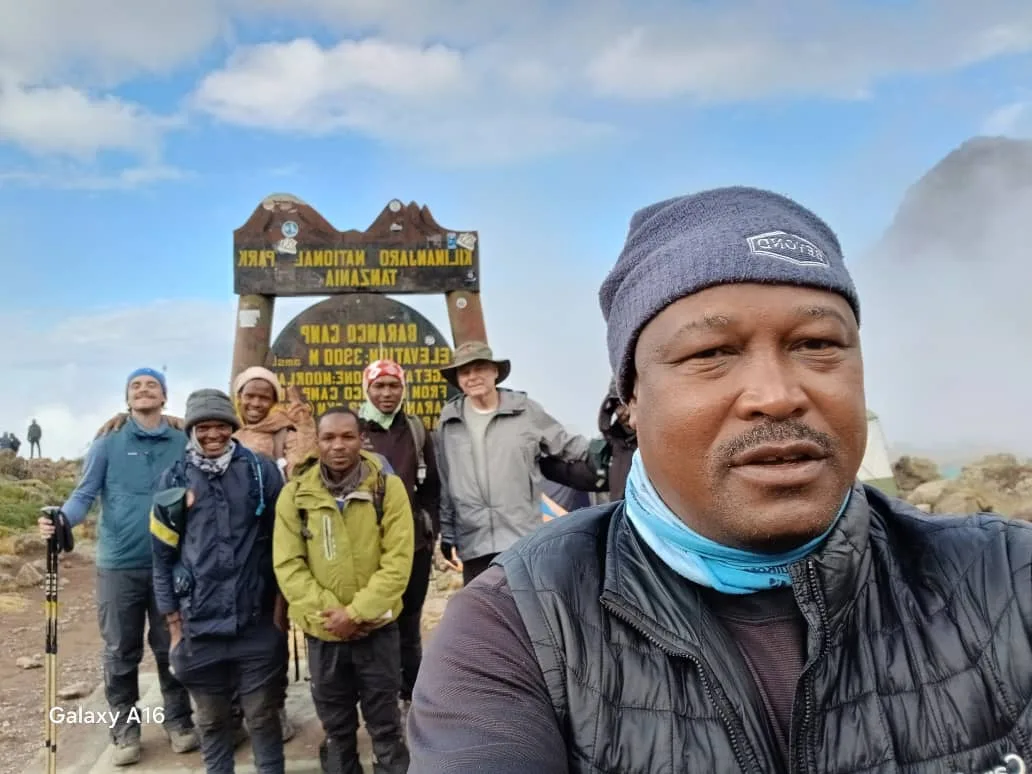
Machame starts in the rainforest on the southern side. On day three you climb to Lava Tower and then drop to Barranco Camp to sleep. Climbing high and sleeping lower like this helps your body adjust. The 7-day Machame climb spends a night at Karanga Camp. The 6-day version walks from Barranco to Barafu in one day, so it suits people who have been to altitude before.
Lemosho route
Lemosho starts on the quieter western side at Londorossi Gate. The first night is at Mti Mkubwa, Swahili for “big tree”, in the forest. Next you cross the Shira Plateau and join the Machame route at Lava Tower and Barranco. The 8-day Lemosho climb adds a night at Moir Hut, which gives you one more day to adjust. That makes it one of the best choices for a first climb. There is also a 7-day Lemosho.
Shira route
The Shira route also starts from the west, but your first night is already up on the Shira Plateau. As a result, you start high without the forest days of Lemosho. It comes in 7 and 8 days. If you have not been to altitude before, Lemosho covers the same ground with a gentler start.
Rongai route
Rongai is the only route that starts on the northern side, near the Kenyan border. You camp at Simba Camp, Second Cave, Kikelewa and Mawenzi Tarn below Mawenzi peak. Then you make the summit climb from Kibo Hut and come down the Marangu side via Horombo. The northern side is usually drier. Choose the 7-day Rongai over the 6-day Rongai if you can spare the day.
Northern Circuit
The 9-day Northern Circuit is our longest climb. It starts at Londorossi Gate, crosses the Shira Plateau and circles the quiet northern slopes. On the way you sleep at Moir Hut, Buffalo Camp, Third Cave and School Hut. Nine days give you the most time to adjust of any route we run.
Which Kilimanjaro route should you choose?
- First time at altitude, and you have the time: the 8-day Lemosho or the 9-day Northern Circuit.
- The classic route: the 7-day Machame.
- A drier, quieter side of the mountain: the 7-day Rongai.
- Short on time: a 6-day Machame or Rongai. These work best if you have recently been to altitude or climb Mount Meru first.
- A climb and a safari: the 10-day Machame climb and safari ends with Tarangire, the Ngorongoro Crater and Lake Manyara.
Summit night
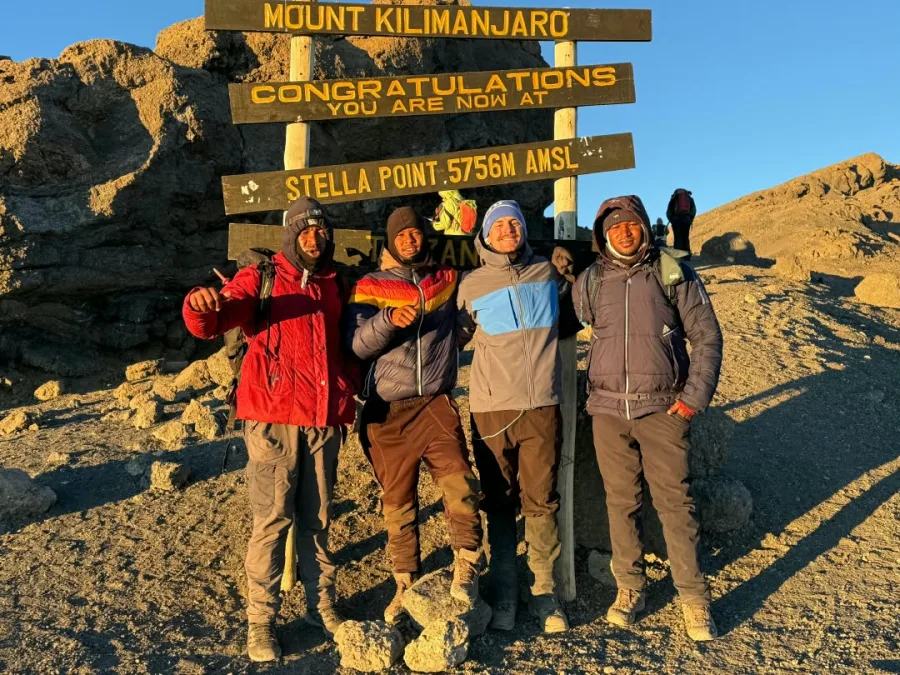
On the Machame, Lemosho and Shira routes, you start summit night at Barafu Camp, 4,673 m. First you climb to Stella Point on the crater rim at 5,756 m. Then you follow the rim to Uhuru Peak. After the summit you walk down to Mweka Camp the same day, so it is a long day. That is why your guides set a slow, steady pace from the start of the climb.
When to climb
The main climbing seasons are the drier months, roughly January to early March and June to October. April and May are the wettest. To get ready, read our guide on how to train for Kilimanjaro.
Mount Meru: a 4-day climb near Arusha
Mount Meru is Tanzania’s second-highest mountain, inside Arusha National Park. The 4-day Mount Meru climb goes from Momella Gate via Miriakamba Hut and Saddle Hut to Socialist Peak. Many climbers use it to adjust to altitude before Kilimanjaro.
Njia za Mlima
Kilimanjaro climbs and Mount Meru
Every route we run, with prices and full day-by-day itineraries.
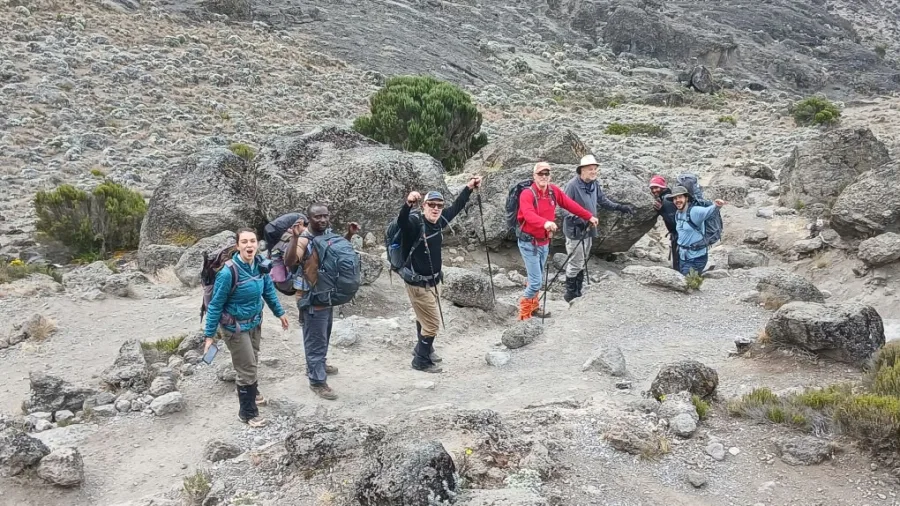
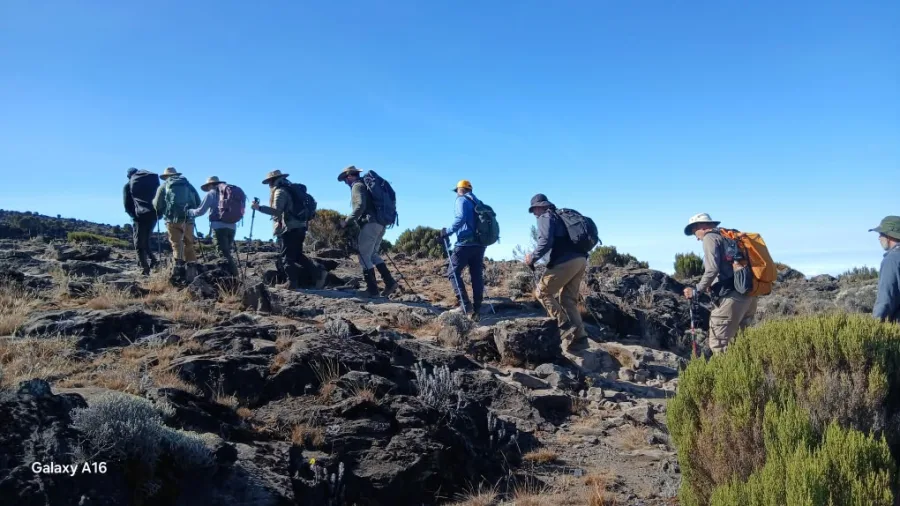
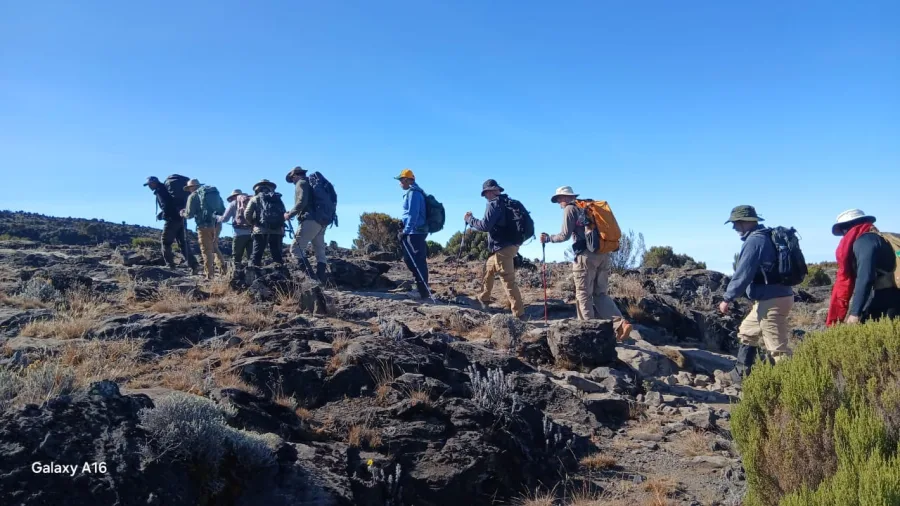
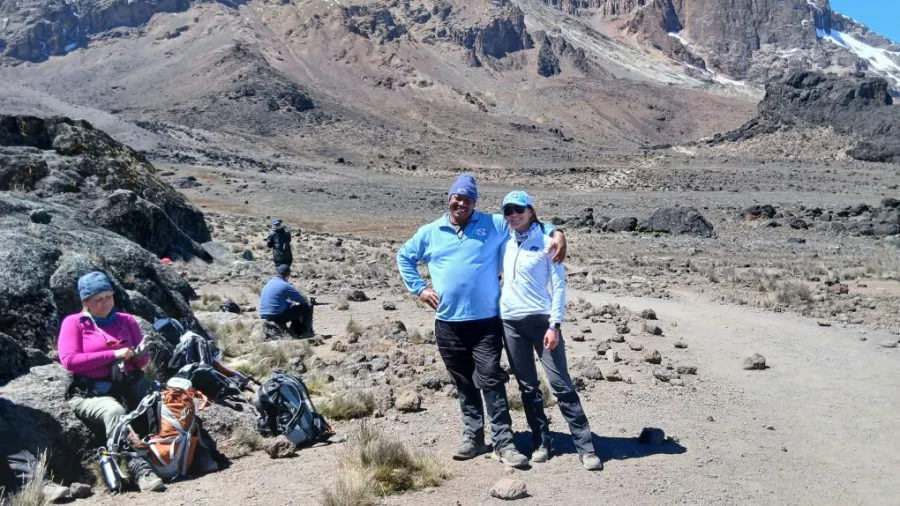
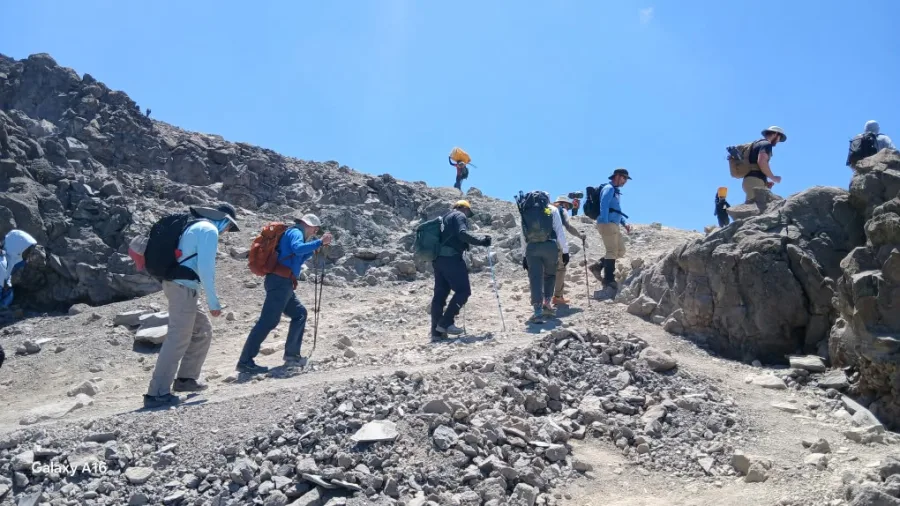
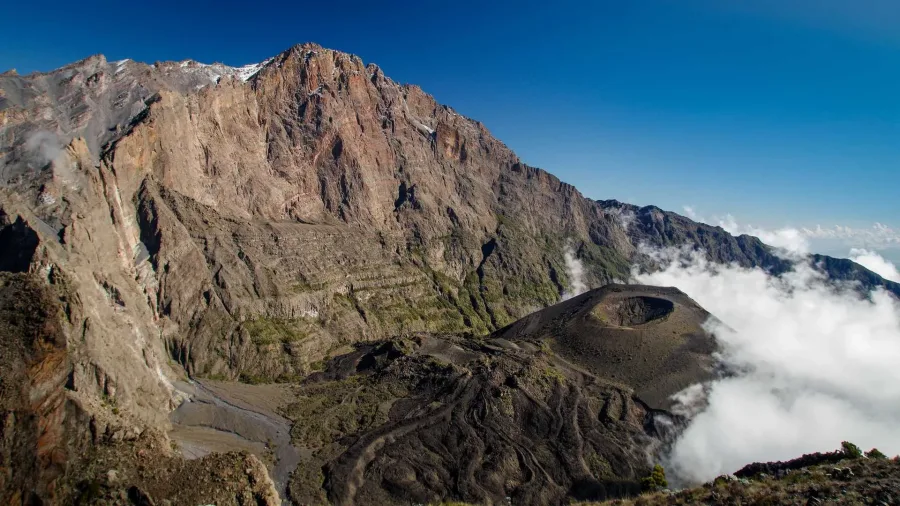
Lake Manyara National Park · Mount Kilimanjaro · Ngorongoro Crater
10-Day Kilimanjaro Trekking - Machame Route & Safari
Kilimanjaro Success Rate Calculator
Maswali
Kilimanjaro questions
Do I need climbing experience to climb Kilimanjaro?
No. Our routes are long walks, not technical climbs, so you do not need ropes or climbing skills. Good walking fitness helps, and enough days to adjust to the altitude matter most.
How many days does it take to climb Kilimanjaro?
Our climbs take six to nine days, depending on the route. More days on the mountain give your body more time to adjust before summit night.
What is the minimum age for a Kilimanjaro climb?
Our Kilimanjaro climbs are listed from age 12. Each climb shows its minimum age on its page.
How high is Kilimanjaro?
Uhuru Peak, the summit, is 5,895 m. Stella Point on the crater rim is 5,756 m and Barafu Camp, where many routes start summit night, is 4,673 m.
Can I add a safari after my climb?
Yes. The 10-day Machame climb and safari already includes one, and we can add safari days after any of our climbs. See our Tanzania safaris.
Wasiliana Nasi
Ask us about a Kilimanjaro climb
Tell us your dates, your group and the route you are considering. We will reply with an itinerary and a quote.